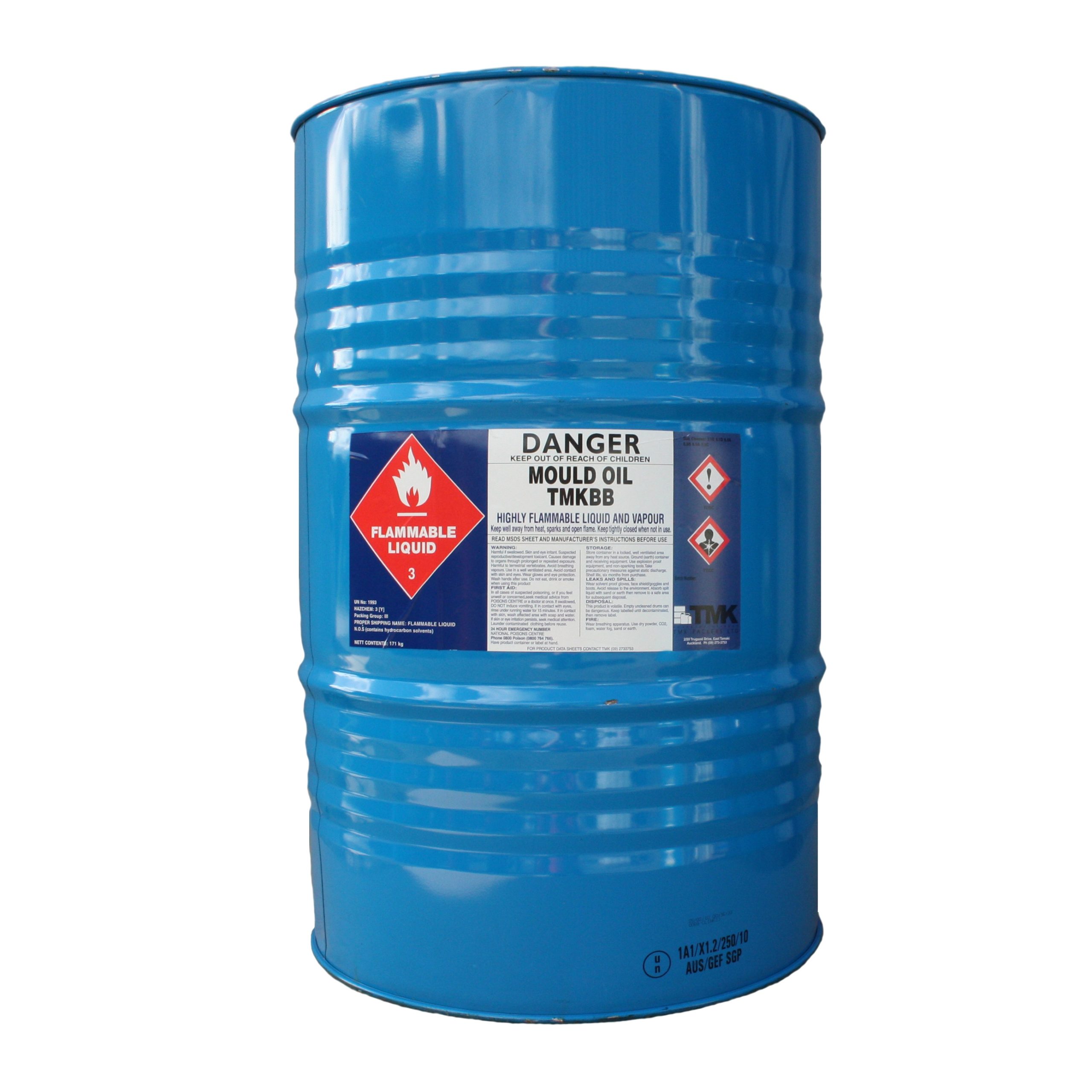
As a bulk supplier of Mould Release Oil BB in New Zealand, we cater primarily to industrial customers. Please download and read the Material Safety Data Sheet for detailed safety and handling instructions.
Applications & Uses
Mould Release Oil TMKBB is a specialized lubricant and parting agent designed to prevent adhesion between mould surfaces and the materials being cast, molded, or formed. It ensures easy removal of cast products, extends mould life, and enhances the surface finish of the final product.
- Concrete Casting & Precast Industry: Prevents concrete from sticking to moulds and formwork, ensuring a smooth release and high-quality surface finish.
- Plastic & Rubber Moulding: Used in injection moulding and compression moulding processes to prevent parts from sticking to the mould.
- Metal Casting & Foundry Work: Helps release molten metal from casting moulds while reducing surface defects.
- Fiberglass & Composite Manufacturing: Assists in demoulding resin-based and composite materials such as carbon fiber and fiberglass.
- Gypsum & Plaster Casting: Ensures clean separation of plaster moulds used for architectural elements, sculptures, and decorative products.
- Foam & Polyurethane Casting: Facilitates easy release of polyurethane foams used in furniture, insulation, and automotive components.
- Baking & Food Processing (Food-Grade Variants Only): Some specialized variants are used to coat baking trays and food moulds to prevent sticking.
- Automotive & Aerospace Applications: Applied in precision moulding processes to ensure defect-free castings and components.
Potential Customers & Industries
- Construction & Civil Engineering:
- Concrete pre-casting plants
- Road and bridge construction companies
- Architectural element manufacturers
- Formwork and scaffolding suppliers
- Plastics & Rubber Manufacturing:
- Injection moulding and extrusion companies
- Rubber product manufacturers
- Plastic component suppliers for automotive and industrial use
- Metal Casting & Foundry Industry:
- Aluminum and steel casting facilities
- Foundries producing machine parts, engine blocks, and metal tools
- Fiberglass & Composites Industry:
- Aerospace and defense manufacturers
- Marine and boat building companies
- Sports equipment manufacturers (e.g., carbon fiber bicycles, racing helmets)
- Automotive & Heavy Machinery:
- Automotive parts suppliers
- Industrial machine parts manufacturing
- Tire and rubber industry
- Gypsum & Ceramic Industry:
- Decorative plaster and gypsum product manufacturers
- Tile and sanitaryware production units
- Foam & Polyurethane Industry:
- Furniture manufacturers using PU foam
- Insulation and packaging industries
- Food Processing & Bakeries (For Food-Grade Variants):
- Industrial baking companies
- Confectionery and chocolate moulding facilities
Safety & Handling:
Protective Gear: When applying the mould oil, wear gloves and eye protection to avoid skin and eye contact.
Ventilation: Ensure proper ventilation in enclosed areas to avoid inhaling vapors from the oil or any diluting agents.
Storage: Store the oil in a cool, dry place, away from direct sunlight and ignition sources.
Rust Prevention: For steel forms, it is important to store the moulds in a protected area to prevent rusting, which can cause staining on the finished concrete.
Disposal: Follow local regulations for disposal of any unused product or empty containers. For more information, refer to the Material Safety Data Sheet (MSDS) available for download.